The Life and Troubled Times of Mayor Montuemhat
SPEAKER: John Freed
DATE/ TIME: Tuesday, December 5, 2023, 6:00 P.M. EST.
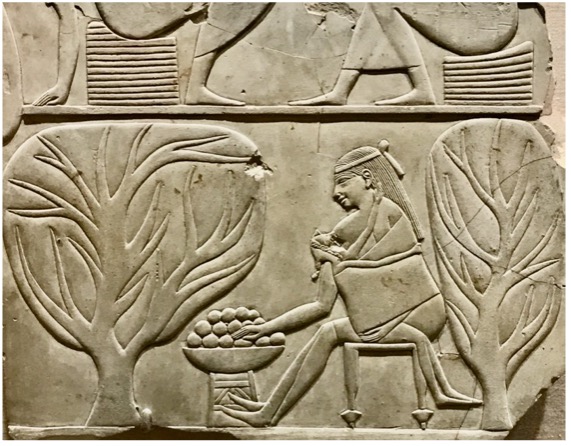
ABSTRACT: The lecture will discuss the life and times of Montuemhat, one of the best known and most important noblemen in Egyptian history. Montuemhat was the mayor of Thebes and a priest in the temple of Amun during the 25th (Nubian) and early 26th (Saite) Dynasties. He restored the temple at Karnak after the Assyrians sacked it and built one of the largest non-royal tombs in Egyptian history. The reliefs from his tomb contain some fascinating examples of what is called “archaizing art” as well as some very clear examples of copying scenes almost directly from earlier tombs.
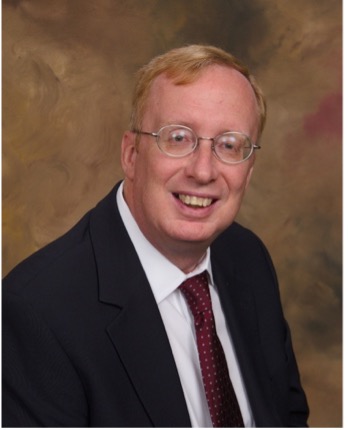
SPEAKER: Mr. Freed has had a life-long fascination with ancient Egypt and holds a degree in Middle Eastern Studies from City University of New York. He is the author of several articles published in KMT: A Modern Journal of Ancient Egypt, one of which was entitled “Nubians, Assyrians & Saites, The Life and Troubled Times of Mayor Montuemhat,”. He is also the President of the New York Chapter of the American Research Center in Egypt.
The Reign of Tutankhamen – What New Evidence Reveals
SPEAKER: Professor Nozomu Kawai
DATE/ TIME: Monday, December 4, 2023, 7:00 P.M. EST.

ABSTRACT: In spite of Tutankhamun’s tomb — excavated 101 years ago — being the richest burial chamber discovered in Egypt, his reign has been obscured due to the erasure of his memory by later Pharaohs and a dearth of hard evidence. He was long considered an unimportant king, and his
sovereignty was largely disregarded because of its short duration of less than 10 years. However, considerable documentation to the contrary is available nowadays. This lecture by Professor Nozomu Kawai of Kanazawa University, presented in collaboration with ARCE’s New York Chapter and National Headquarters, introduces the current understanding of Tutankhamun and his time utilizing new information.
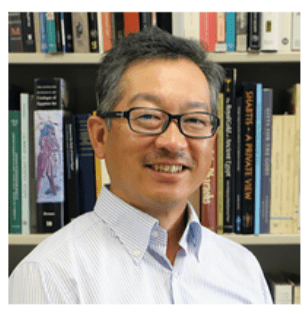
ABOUT THE SPEAKER: Professor of Egyptology, Director of the Institute for
Study of Ancient Civilizations and Cultural Resources (ISAC) at Kanazawa
University, Japan and the Director of North Saqqara Project. Specializing in history,
art and archaeology of the New Kingdom in Egypt, with a particular emphasis on the
period from the late Eighteenth Dynasty to the Nineteenth Dynasty. I have been
directing Japanese archaeological excavation at Northwest Saqqara / South Abusir
since 2001. My Ph.D. thesis was on the reign of Tutankhamun (Studies in the Reign of
Tutankhamun, Department of Near Eastern Studies, Johns Hopkins University, 2005).
I am currently working for the revision of my original dissertation for publication.
The Earliest Images of Horse and Chariot Battle in Egypt: A Re-Evaluation
SPEAKER: Dr. Steve Harvey
DATE/ TIME: Tuesday, October 24, 2023, 6:00 P.M. EST.
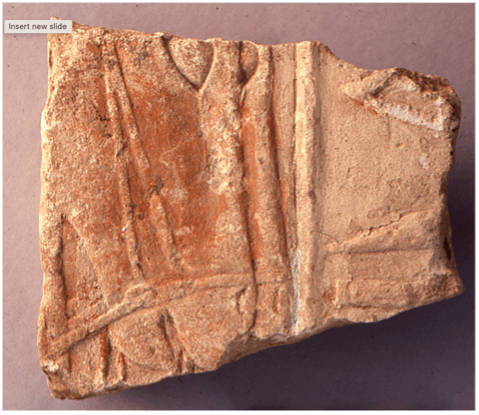
ABSTRACT: Since the discovery at Abydos in 1993 of fragments of a complex horse and chariot battle narrative in the remains of the pyramid temple of King Ahmose (ca 1550-1525 BCE), a number of previously unknown or lost fragments of similar battle scenes featuring equids have come to light. In particular, the recent publication of battle scenes from the temple of Thutmose I in Qurna, rediscovered in a tomb used as a storeroom, allows a more thorough re-evaluation of the Ahmose fragments in relation to these stylistically related decorative programs. The apparent influence of the innovative Ahmose scenes, the earliest yet known in Egyptian art, will be elucidated in an effort to sketch the development of the horse and chariot genre during the first half of the Eighteenth Dynasty.
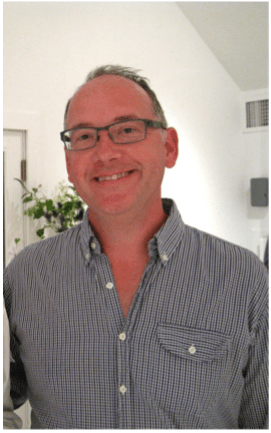
ABOUT THE SPEAKER: Since 1993, Stephen Harvey has been Director of the Ahmose and Tetisheri Project, which centers on excavation of the pyramidal complex of King Ahmose at Abydos, southern Egypt. He received his Ph.D. in Egyptian Archaeology in 1998 from the University of Pennsylvania, and his B.A. in Archaeological Studies from Yale University in 1987. Harvey’s fieldwork in and around the pyramid complex of Ahmose (ca 1550-1525 BC) has resulted in major discoveries, including several previously undiscovered temples, the identification of the pyramid of Queen Tetisheri, and the analysis of thousands of fragments of the temples’ decorative program. In addition to extensive fieldwork at Abydos, Harvey has worked in Egypt at Giza and Memphis, as well as on archaeological projects in the United States, Syria (Tell es-Sweyhat), and Turkey (Gordion).
Harvey has held teaching and curatorial positions at a number of leading Egyptological institutions. From 2003-2006, Harvey was Assistant Professor of Egyptian Archaeology in the Oriental Institute and the Department of Near Eastern Languages and Civilizations, The University of Chicago. In 2006, he led the reinstallation of the Picken Family Nubian Gallery of the Oriental Institute Museum, together with co-Curator Bruce Williams. From 1998 to 2002, Harvey was Assistant Director of the Institute of Egyptian Art & Archaeology and Assistant Professor in the Department of Art of the University of Memphis, TN. Harvey was Assistant Curator for Egyptian Art at the Walters Art Museum in Baltimore, Maryland from 1996 to 1998. Harvey has also held research associate appointments at Johns Hopkins University, the University of Pennsylvania Museum, and Stony Brook University. He has been interviewed for and consulted on many international television documentaries, including the series “Scanning the Nile/Mystères du Nil,” (Label Films, France, 2020); “Unearthed” (Windfall Films, 2018-2021); “Mysteries at the Museum” (Travel Channel, 2018); “Building Pharaoh’s Chariot” (NOVA, PBS 2013); “Egypt: Engineering an Empire” (History Channel); and “Egypt’s Golden Empire” (PBS), and “Lost Treasures of Egypt” (National Geographic), in addition to national and local news programs in the US. He has been invited to public and academic audiences throughout the United States, as well as in Canada, England, Egypt, France, Australia, and New Zealand. Since 2000, Harvey has also been a popular
Powerful Women of Thebes: The Tomb of the ‘Three Princesses’ at Deir el-Bahri
SPEAKER: Dr. Janice Kamrin
DATE/ TIME: March 21st, 2023, 6:00 P.M. Co-sponsored by the Salmagundi Club.
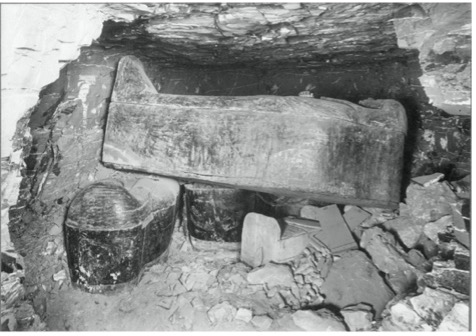
ABSTRACT: The Met is privileged to display a number of objects from Tomb MMA 60, excavated in the 1920s by Herbert Winlock and the Egyptian Expedition, and gifted to the Museum by the Egyptian government. Dating to around 1000 BCE, this rock-cut sepulcher housed the burial equipment and bodies of at least a dozen elite women and men. This talk will explore the tomb and its occupants, including three priestesses who were members of the immediate family of the High Priests of Amun who controlled the Theban region at this time.
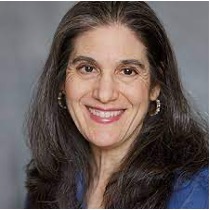
ABOUT THE SPEAKER: Janice Kamrin holds a BA from Bryn Mawr College and a PhD from the University of Pennsylvania. Her research interests include Middle Kingdom tomb art, the archaeology of Thebes, and the funerary arts of the first millennium. As a curator in the Department of Egyptian Art at The Met, she oversees matters related to The Museum System (TMS) and technology in general. She is a member of the Joint Expedition to Malqata, the festival city of Amenhotep III, and is working on projects related to the archives of The Met’s early 20th Century Egyptian Expedition. Before coming to The Met, Janice directed several projects at the Egyptian Museum, Cairo, for the American Research Center in Egypt and worked closely with Zahi Hawass, former head of the antiquities service. She is on the board of the American Research Center in Egypt.
Luxor Obelisk and its Journey to Paris
SPEAKER: Dr. Bob Brier
DATE/TIME: January 31st, 2023. Co-sponsored by the Salmagundi Club.
The Middle Kingdom Theban Project: Officials, Tombs and the Early Middle Kingdom at Thebes
SPEAKER: Dr. Antonio J. Morales
DATE/ TIME: Thursday, January 19, 2023, 6:00 P.M. EST.
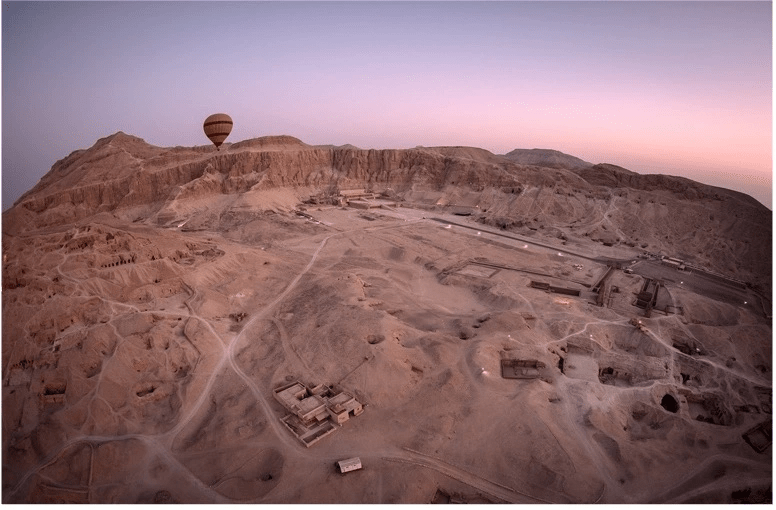
ABSTRACT: In the last six years, the University of Alcalá Expedition and its Middle Kingdom Theban Project have set up a multidisciplinary and international team of experts that is conducting archaeological excavation, epigraphic work, and conservation in several tombs in the area of Deir el-Bahari, with the goal of improving our knowledge of the later part of the Eleventh Dynasty and the beginning of the so-called “Classical Period”. In the first two years of work (2015-2016), the team started excavating the upper section of the courtyards in the complexes of the great steward Henenu (TT 313 / MMA 510) and the vizier Ipi (TT 315 / MMA 516). In the following two years, the expedition experienced a significant increase in the number of monuments under investigation. The funerary complexes of the director of prisons Djari (TT 366 / MMA 820) and the vizier Dagi (TT 103 / MMA 807), located in the plain of Asasif were also incorporated. Additionally, the entire eastern sector in the northern hills at Deir el-Bahari, where the tomb of Neferhotep (TT 316 / MMA 518), two “unfinished” tombs (MMA 519-520), and a large complex (MMA 521) are located was also incorporated. In this talk, Dr. Antonio Morales will present the major aims and strategies developed to respond to the main questions of the project. Documenting, studying, and publishing several of these monuments from Deir el-Bahari and Asasif will no doubt allow scholars to have a better understanding of the role of Thebes in the construction of the classical age in pharaonic history.
ABOUT THE SPEAKER: Antonio Morales is Assistant Professor in Egyptology in the Seminar of Ancient History at the University of Alcalá (UAH). He is currently based at the Department of Near Eastern Languages and Civilizations as Real Colegio Complutense Visiting Professor. Previously, he was Lecturer in Egyptology and Research Associate at Freie Universität Berlin, postdoctoral researcher at Heidelberg Universität, and Assistant Researcher at Mainz Universität. He obtained his PhD in Egyptology from the University of Pennsylvania (Philadelphia 2013).
Antonio Morales has participated in several expeditions to Egypt and is currently the director of The Middle Kingdom Theban Project, a research initiative concerned with the documentation, study, and publication of tombs of the late Eleventh Dynasty and early Middle Kingdom in the necropolis of Deir el-Bahari and the Asasif at Thebes (Luxor). He has published multiple articles in scientific journals and contributions to books. In addition, he has edited a volume on beer in the ancient world (Seville 2001), has co-edited a volume on divine kingship (Philadelphia 2011), has completed a monograph on the Pyramid Texts dealing with the goddess Nut (Hamburg 2017), and has co-edited a volume on Middle Kingdom archaeology, history, and culture published at the Harvard Egyptological Studies (Boston 2021).
 American Research Center in Egypt, New York Chapter