2024 Lectures
ARCE NY Presents an Event at the National Arts Club:
Imperial The Burial of Queen Ahhotep
SPEAKER: Peter Lacovara
DATE/ TIME: Wednesday, October 16, 2024, 6:30 P.M. EST.

ABSTRACT: Returning lecturer Peter Lacovara, Director of The Ancient Egyptian
Heritage and Archaeology Fund and author of the forthcoming The Triumph of Thebes, discusses the burial of Queen Ahhotep. Her gilded coffin, magnificent jewels, and decorated ceremonial objects were discovered in Thebes by French Egyptologist Auguste Mariette in 1859. Among the ornaments were fly pendants associated with military honor. They mirror Queen Ahhotep’s role recorded in a Karnak inscription: “The princess, the king’s mother, the noblewoman who knows things and takes care of Egypt.”
ABOUT THE SPEAKER: Peter Lacovara (B.A. 1976, Boston University; Ph.D. 1993 The Oriental Institute of the University of Chicago) is Director of The Ancient Egyptian Archaeology and Heritage Fund. He was Senior Curator of Ancient Egyptian, Nubian, and Near Eastern Art at the Michael C. Carlos Museum from 1998 to 2014. Previously he has served as Assistant Curator in the Department of Ancient Egyptian, Nubian and Near Eastern Art at the Museum of Fine Arts, Boston. Currently he is also Consulting Curator for the Egyptian Collection at the Albany Institute of History and Art and Visiting Research Scholar at the American University in Cairo.
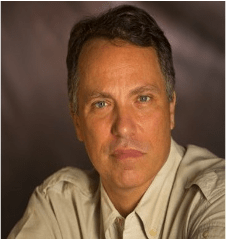
His archaeological fieldwork has included excavations at the Valley of the Kings at Thebes, the Palace city of Amenhotep III at Malqata in Western Thebes, Abydos, Hierakonpolis and at the Giza Plateau, and currently he is directing the survey and restoration of the site of Deir el-Ballas. His publications include studies on Daily Life and Urbanism in Ancient Egypt, Egyptian Mortuary Traditions, and the Material Culture of Ancient Egypt and Nubia.
ARCE NY Presents an Event at The Institute for the Study of the Ancient World:
Imperial Waters: Unraveling the Impact of Nile Floods on Roman Egypt and the Empire
SPEAKER: Sabine Huebner
DATE/ TIME: Monday, October 21, 2024, 5:30 P.M. EST.
ABSTRACT: Prof. Sabine Huebner returns to ISAW (VRS 2008) to share some of her recent work on the ancient environment, exploring how the Nile’s floods shaped Egypt’s agriculture, society, and political stability, highlighting the incredible adaptability of the Egyptian people to environmental changes over centuries. By reconstructing the annual patterns of Nile floods during the Roman era, using a mix of papyri, inscriptions, coins, literature sources, and
environmental data, one may gain a clearer understanding of how these floods varied year by year in terms of timing and volume and of how they influenced daily life. The annual summer floods did not just affect Egypt’s ability to grow food—it was also vital for supplying grain and other resources to Rome and its military. Understanding these flood patterns allows us to see their deep impact on the Roman Empire’s political and economic journey. This paper will reveal
how a blend of climate change, particularly in the Nile flooding, and political choices shaped agricultural output, tax policies, and overall economy of Egypt under Roman rule. Notably, it shows that several Roman emperors implemented key reforms as strategic responses to the Nile’s declining flood levels, reflecting a complex interplay between nature and governance.
ABOUT THE SPEAKER: Sabine R. Huebner is Professor of Ancient History at the University of Basel, Switzerland, and a Fellow at the Radcliffe Institute for Advanced Study at Harvard University for the 2024–2025 academic year. She was a Visiting Research Scholar at ISAW in 2007–2008. Her scholarly contributions include three monographs, notably The Family in Roman Egypt (CUP 2013) and Papyri and the Social World of the New Testament (CUP 2019), as well as several edited volumes and numerous articles. Her research focuses on the religious and social
history, ancient disease, and human-environment interactions of antiquity, with a particular emphasis on Graeco-Roman Egypt. Her current monograph project is Roman Egypt in the Third Century CE: Climate Change, Societal Transformations, and the Transition to Late Antiquity; and she is co-editing a volume entitled The Roman Climate Optimum and the Disintegration of the Roman Empire.
The New Sky Over Esna Temple: The Astronomical Ceiling of the Roman Pronaos
SPEAKER: Dr. Christian Leitz
DATE/ TIME: Tuesday, September 24, 2024
ABSTRACT: The pronaos of Esna is one of the last examples of ancient Egyptian temple
architecture, decorated mainly during the Roman period. In 2018, the University of Tübingen, in co-operation with the Egyptian Ministry of Antiquities (now Ministry of Tourism and Antiquities),
launched a joint project with the Documentation Center of the Ministry to completely restore the pronaos, whose walls were heavily covered by soot. The complete astronomical ceiling as well as most of the columns have been cleaned and appear now in bright colors approximating their original appearance. During the cleaning nearly 200 painted ink inscriptions were discovered.
The lecture examines all 6 bays of the astronomical ceiling, representing the paths of the sun and the moon, the decans (stars which were used to measure the hours of the night), some known and many unknown Egyptian constellations as well as the twelve signs of the zodiac.
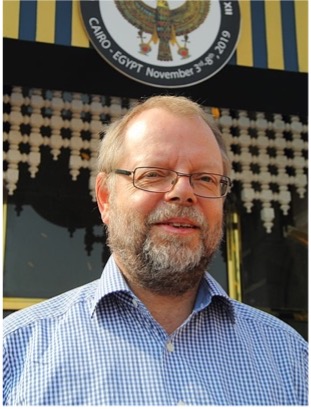
ABOUT THE SPEAKER: German by birth, Egyptologist by profession, Dr. Christian Leitz studied Egyptology, Assyriology and Coptology at the universities in Marburg and Göttingen receiving his PhD in Göttingen in 1989. In 1993, he was habilitated at the University of Cologne where he also held a Heisenberg scholarshipfrom the German Research Foundation from 1993 to 1998. From 1999 to 2003, he led the project “Lexicon of Egyptian Gods and Names of Gods” at
the Seminar for Egyptology in Cologne. Since 2004, he has been a full professor of Egyptology at the University of Tübingen also teaching as a visiting professor at the École Pratique des Hautes Études and the Collège de France (both in Paris) and at Cairo University.
His most important current research work is the Athribis Project. The objective is to fully and thoroughly research, preserve and publish the written records, material technologies and architectural history of the large temple in the ancient city of Athribis dedicated to the god Min-Re, his wife Repyt and their son, the child-god Kolanthes. The site is near the modern Middle Egyptian city of Sohag.
Food and Drink in Late Antique Egypt
(from Coptic Sources)
SPEAKER: Dr. Sohair Ahmed
DATE/ TIME: Tuesday, August 6, 2024
ABSTRACT: Food is very important to human life not only for eating, but also for healing. Food and drink typically reflect the culture of Egyptians in different periods. The staple food of the ancient Egyptians was bread and beer. They also ate many kinds of agriculture crops.
In the post-Pharaonic period, Egyptians were mixed with different cultures, such as the cultures of the Greeks, Romans, and Arabs, which affected their food and drink. Christianity also influenced the diet of Egyptians in late antiquity (the third – eighth centuries AD). The Copts are the Egyptians who lived in this period and most of them were Christians. They left many documents and artifacts that tell us about their daily life, including food and drink. Therefore, this lecture will provide short information about types of food and drink, meal recipes, taboos, symbolism of food, industries depending on edible plants, and food in medicine. There is also a short reference to the animals that consumed kinds of food of people. The information of lecture gathered by me from Coptic documents and monuments.


ABOUT THE SPEAKER: Sohair Ahmed is a Coptologist and Egyptologist born and living in Egypt; she obtained her BA from the Department of Archaeology (ASU) in 2002. She is an assistant professor in Coptic Papyrology, with very good knowledge of Coptic art and culture. She has published many Coptic documentary texts, such as letters, contracts, and tax receipts and she created the first series of booklets on ancient Coptic society with several dictionaries. She also has many international publications and is a candidate for international awards.
The Theodore N. Romanoff Prize Lecture:
Reading Images in Hieroglyphs: Rethinking Literacy in Ancient Egypt
SPEAKER: Dr. Victoria Almansa-Villatoro
DATE/ TIME: Tuesday, June 11th, 2024
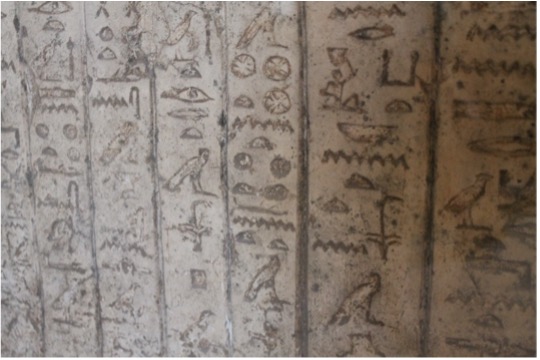
ABSTRACT: It is assumed that only 1% of ancient Egyptians were able to read texts and that full literacy in the ancient world was only achieved after the introduction of the alphabet. This lecture challenges these ideas by showing how hieroglyphs could have been understood as images by Egyptians with different levels of education in the Old Kingdom (ca. 2700–2300 BCE). The evidence collected comes from publicly displayed royal inscriptions that exempted temple communities from taxation and mandatory labor. It will be shown that the texts were composed using a range of visual and iconic strategies that made messages accessible to the broader population.
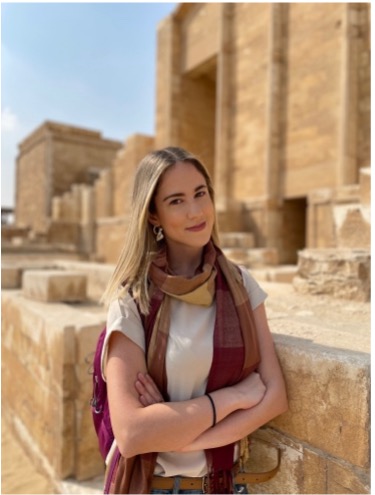
ABOUT THE SPEAKER: Victoria Almansa-Villatoro is currently a Junior Research Fellow at the Harvard Society of Fellows, and will be starting as an Assistant Professor of Egyptology at Yale University in 2025. She earned her Ph.D. in Egyptology from Brown University in 2022, where she was teaching courses on Egyptian language and archaeology. She has authored books and articles on earlier Egyptian language, literature, religion, and archaeology. She has been a research fellow at the American Research Center in Egypt and the Stiftungdsfonds für Postgraduates der Ägyptologie. She is Assistant Director to the Expedition to the Royal Pyramids and Necropolis of Nuri (Sudan), and an archaeologist at the Giza Plateau Mapping Project with Ancient Egypt Research Associates.

Divine Palaces, Processional Barks, and Unusual Forms of Osiris:
New Insights into Religious Ritual at Ramesside Abydos
SPEAKER: Ogden Goelet
DATE/ TIME: Saturday, June 22nd, 2024 (Zoom Lecture)
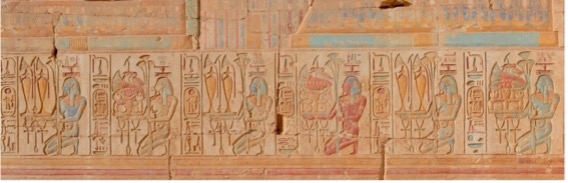
ABSTRACT: During the Nineteenth Dynasty, the Abydos temple ofRamesses II played a significant role in the Khoiak festival, the central event of the Thinite Nome’s religious calendar. There are many interesting and overlooked features in this temple, the first that Ramesses built independently in what was to be an extraordinarily ambitious program of those monuments known as memorial temples, or more properly, Temples of Millions of Years.
This lecture, however, will concentrate mostly on temple’s western section at the back, the location of the so-called Osiris Suite. This was a group of five normal rectangular rooms symmetrically arranged around the temple’s largest chapel, which was dedicated to Osiris, the chief deity of the dead, the afterworld, and Abydene nome itself.
ABOUT THE SPEAKER: Dr. Ogden Goelet received his BA in German Literature and Ph.D. in Ancient History from Columbia University in 1982. Goelet was a Full time member of the Department of Middle Eastern and Islamic Studies at NYU from 1988 to 2014. He taught undergraduate courses in Egyptian History, Religion, and
Cultural History, and graduate courses in Old, Middle, and New Egyptian.
Goelet retired from full time teaching in 2014, joining the Institute for the Studies of the Ancient World (ISAW) as a Research Associate and continued teaching Egyptian
language until 2018. Now fully retired but continuing to research and publish.
How Napoleon Invented Egyptology
SPEAKER: Dr. Benson Harer
DATE/ TIME: Wednesday, May 8, 2024

ABSTRACT: In collaboration with the American Research Center in Egypt’s Washington Headquarters and New York Society, the NAC presents W. Benson Harer Jr., renowned lecturer in the field of Egyptology. Dr. Harer discusses Description de l’Égypte. In 1798 Napoleon Bonaparte sought to conquer Egypt, turning the nation into a French colony. To exploit the situation fully, he took a cadre of scholars and scientists numbering more than 150 to study every aspect of the country, both ancient and modern. His military campaign failed, but his savants published their findings in the massive, multi-volume Description de l’Égypte. The books’ success launched Egyptology as an academic field.

ABOUT THE SPEAKER: Dr. Benson Harer is an Adjunct Professor of Egyptian Art at California State University, San Bernadino. Dr. Harer has been fascinated with ancient Egypt his entire life and in 2014, he and his late wife, Pamela, created the Pamela and Dr. Benson Harer Fellowship specializing in Egyptology. The Harer Family Trust has also provided a substantial collection of Egyptian antiquities as gifts that are on permanent loan to the Robert and Frances Fullerton Museum of Art.
‘The Rediscovery of Thutmose III and Hatshepsut’
SPEAKER: Aidan Dodson
DATE/ TIME: Tuesday, March 16th, 2024, 6:00 P.M. EST.
ABSTRACT:
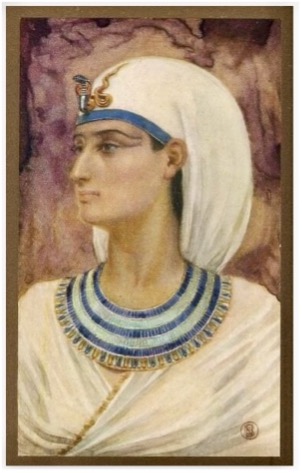
Hatshepsut – Wife of Pharaoh Thutmose II, became regent to his successor, her step-son Thutmose III. She seized the throne, becoming one of the few female rulers of Ancient Egypt from c: 1505-1482 BC. Her reign was typified by supreme artistic and cultural achievements. Her temple, opposite modern-day Luxor, is considered one of the masterpieces of world architecture.
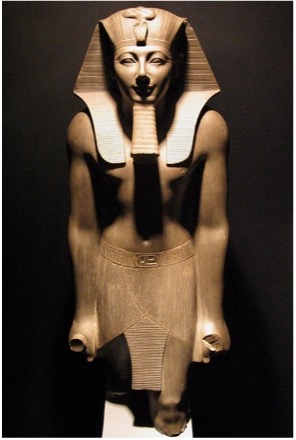
Thutmose III – reigned for almost 54 years, until c. 1425 BC. For the first 22 years he was kept in the background by his step-mother Hatshepsut. As sole ruler, he embarked on a career of conquest, expanding the Egyptian Empire to its largest extant and ushering in a Golden Age. Having never lost a battle, he is nicknamed “The Napoleon of Egypt” and his military tactics are studied to this day. Late in his reign the memory of his predecessor Hatshepsut was expunged from historical records.
Ultimately, they were both forgotten to history and only rediscovered after the ability to read hieroglyphs was regained in the 19th Century. They remain subjects of intense interest and debate to this day.

ABOUT THE SPEAKER: Aidan Mark Dodson is a world-renown Egyptologist and historian. He has been honorary professor of Egyptology at the University of Bristol since 2018. Born in London, he completed a BA at the University of Liverpool (1985), and an MPhil (1986, museum practice and archaeology) and PhD (1995, Egyptology) at Christ’s College, Cambridge. He began teaching at the University of Bristol in October 1996, also holding the post of Simpson Professor of Egyptology at the American University in Cairo from January to July 2013. His primary research interests concern Ancient Egypt, with a particular focus on dynastic history and chronology, tomb architecture, sarcophagus and coffin design, canopic equipment, and the history of Egyptology; he is also an historian of late 19th and early 20th century navies, and has written on the royal tombs of Great Britain.
He is the author of over twenty books, 300 articles and reviews, and is well known to viewers of documentaries concerning Egyptology.
Dodson was elected a Fellow of the Society of Antiquaries of London in 2003.
The Celestial Harmonies at Dendera
SPEAKER: José María Barrera
DATE/ TIME: Tuesday, March 12, 2024
ABSTRACT:
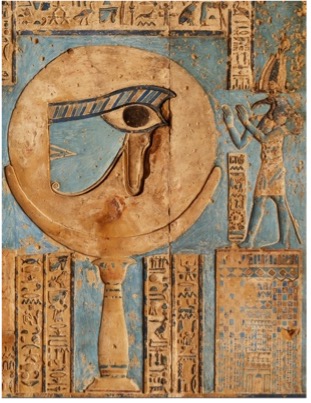
The temple of Hathor at Dendera is one of the best-preserved structures from Ancient Egypt. The ceiling of its pronaos consists of seven massive panels containing much of the astronomical knowledge of the ancient Egyptians, recently cleaned and stabilized to reveal beautiful original colors.
Information about the content and meaning is hard to find and has not been available in English until now. The speaker took more than 5000 photos of the ceiling and reconstructed it in one high-resolution image where every minute detail can be appreciated in amazing clarity. Barrera’s presentation, coinciding with the publication of his new book featuring these stunning images, explores the wonderful celestial images depicted in the ceiling and examines their meaning.
ABOUT THE SPEAKER: José María Barrera is a software engineer specializing in data representation and languages. An avid photographer, his work has been exhibited in galleries in Chicago and New York City and sold at Sotheby’s Auctions. José has been fascinated by Ancient Egypt for more than 20 years. He is the author of the newly released Dendera, Temple of Time: The Celestial Wisdom of Ancient Egypt, which is the subject of this talk.
“When the cat’s away, the mice will play:”
Divine Lessons and Humorous Imagery in Ancient Egypt
SPEAKER: Jennifer Miyuki Babcock
DATE/ TIME: Tuesday, February 13, 2024, 6:00 P.M. EST.
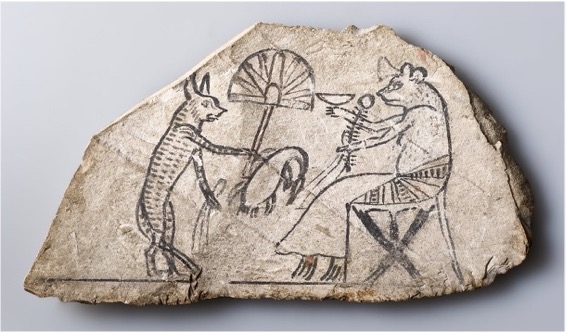
ABSTRACT: An illustrated limestone flake in the Brooklyn Museum’s collection (37.51E) is one of many
limestone flakes, or ostraca, that are associated with the workmen’s’ village of Deir el-Medina. With its humorous drawing of a cat serving an elite mouse dressed in fine linens and seated on a chair, the Brooklyn ostracon is part of a special group of “figured” or illustrated ostraca depicting anthropomorphized animals. Additionally, similar imagery is found in four papyri, now located in
museums in Cairo, Basel, London, and Turin. While elite mice and subservient mice compose a significant portion of the imagery, there is a large menagerie of animals performing a variety of human acts, including jackals, hippos, and caprids. This lecture will reconstruct the environment in which the Brooklyn ostracon was created and explore the narrative possibilities embedded in these images, making them effective storytelling tools and offerings used to appease the “Distant Goddess” and maintain the status quo.
ABOUT THE SPEAKER: Jennifer Miyuki Babcock is Assistant Professor in History of Art and Design at Pratt Institute in Brooklyn, NY. She also teaches classes at Steinhardt, NYU, and The Fashion Institute of Technology, SUNY. Before teaching, Dr. Babcock was a Postdoctoral Curatorial Associate at The Institute for the Study of the Ancient World and held research and fellowship positions at the Metropolitan Museum of Art, The Museum of Fine Arts Boston, and the Brooklyn Museum. She earned her Ph.D. at the Institute of Fine Arts, NYU.
Dr. Babcock is the author of Animal Fables in Ancient Egypt: Tree Climbing Hippos and Ennobled Mice (Brill 2022) which examines how drawings of anthropomorphized animals are linked to oral folklore and the religious environment of New Kingdom Thebes. Dr. Babcock is also interested in the cross-cultural and temporal transmission of artistic iconography in the ancient world and studying cultural parallels between ancient and modern and contemporary lives.
 American Research Center in Egypt, New York Chapter